
Yogacharya Sri. Bellur Krishnamachar Sundararaja (BKS) Iyengar
14. Dec.1918 – 20.Aug.2014
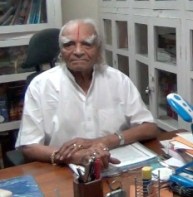
Iyengar yoga is based on the teachings of the yoga master Yogacharya, B.K.S. Iyengar (December 14, 1918 – August 20, 2014). Iyengar yoga is deeply grounded in sage Patanjali’s Astanga Yoga scriptures. Iyengar yoga emphasizes proper anatomical alignment of all parts of the body in each yoga posture (asana). To attain ideal alignment of the body, props are used. The use of props in the yoga practice allows practitioners to access the benefit of the postures regardless of physical condition, age and length of practice and also to learn correct alignment of the body in a safe and effective way. Proper anatomical alignment of the body in the postures promotes harmony between motor and sensory nerves in the body.
Iyengar yoga meaningfully sequences asanas to have a desirable and powerful effect on the body and mind. Asanas are held for a considerable length of time to let the effect of the asana to penetrate deeper within the practitioner.
Iyengar yoga teaches one to be mindful while practicing asana – a form of meditation in action. Mindfulness during asana practice produces a balance between movement and resistance. Guruji, B.K.S. Iyengar, has said that staying in the asanas for a considerable period of time makes the intelligence and consciousness to develop patience, perseverance, and forbearance. Iyengar yoga helps practitioners to develop the physical strength and mental control to hold asanas for relatively long periods of time, strengthening muscles, calming the nervous system and promoting awareness of one’s entire body eventually, leading towards the understanding and experiencing of the union of the body with the mind. This is the stepping-stone to the ‘experience of the spirituality’.
Pranayama (breath control exercises); “Prana” means breath and “ayama” means expansion or prolongation. Pranayama is the prolongation of breath and its restraint. In Iyengar yoga pranayama is introduced after a firm foundation in asana practice is established. In the beginner level classes, breath awareness is developed to experience the pranayama later. Practice of Pranayama develops steady and peaceful mind, strong will power and mental clarity.
The benefits derived from practicing yoga are according to one’s frame of mind.
“Casual practice gives casual results and intense practice brings intense benefits” – B.K.S. Iyengar.
For more information on B.K.S. Iyengar please visit: http://www.bksiyengar.com/
Yoga
The word Yoga is derived from the Sanskrit root “yuj”, meaning to bind or yoke, or union. Yoga is a path to spiritual awareness; practice brings control over the body, mind, intellect, and emotions bringing awareness of one’s true Self, and ultimately, realization of the union of one’s Self with the Universal Self.
Yoga is one of the six orthodox schools of Hindu philosophy. Sage Patanjali systematized and defined yoga in his 196 yoga sutras. He has defined yoga as “Yogas chitta vritti nirodhah” (Patanjala yoga sutra -I.2). Chitta is consciousness, which is comprised of mind, intellect and ego. Yoga is a methodology to restrain (nirodhah) the vibrations (vritti) of chitta.
Sage Patanjali has described eight steps of yoga called Astanga yoga (eight limbs of yoga) or Raja yoga:
“Yama-niyamasana-pranayama-pratyahara-dharana-dhyana-samadhayo’shtav angani” (Patanjala yoga sutra -II.29).
1. Yama: Universal or Social discipline.
a. Ahimsa: Nonviolence
b.Satya: Truth
c. Asteya: Non – Stealing or Non – Covetousness
d. Brahmacharya: Self control
e. Aparigraha: Non – hoarding
2. Niyama: Individual or Self discipline
a. Shaucha: Cleanliness of body and mind
b. Santosha: Satisfaction
c. Tapas: Austerity
d. Svadhyaya: Study of the vedic scriptures
e. Iswarapranidhana: Surrender to Iswara or God (Supreme power).
3. Asana: Postures
4. Pranayama: Breath control
5. Pratyahara: Sense control
6. Dharana: Concentration
7. Dyana: Meditation
8. Samadhi: Super conscious state


 vaayuyogashala.com